
Every vocational program is built around hands-on learning. But the dust, fumes, and airborne particles that come with that work do not stay at the workbench. They move through the air and into the lungs of the students and instructors standing nearby. Your program runs on hands-on work. Keeping that environment safe, compliant, and running starts with having the right air quality solution in place.
Shop programs generate real industrial hazards. The contaminants vary by trade, but the exposure risk is the same in every room where students are working.
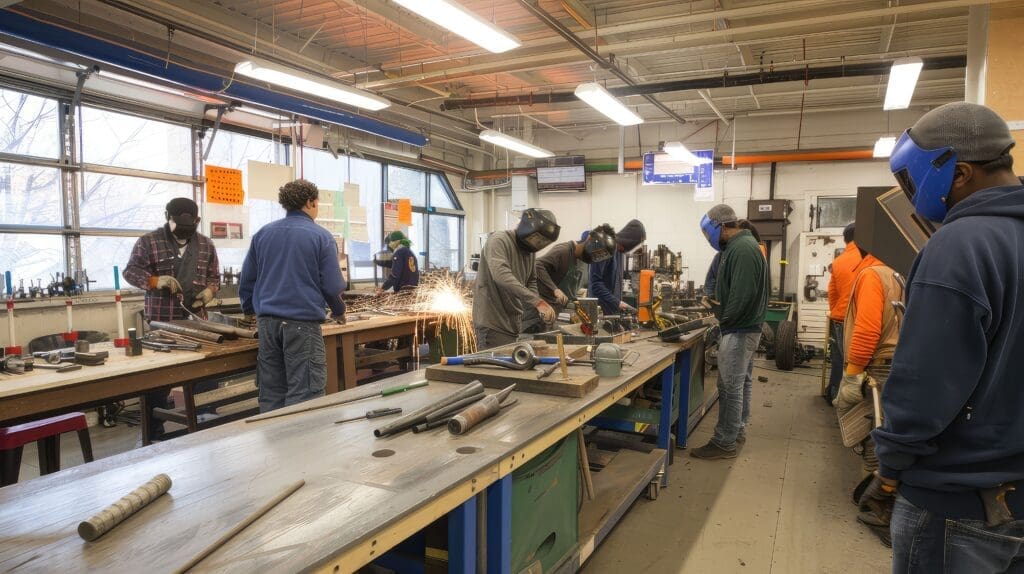
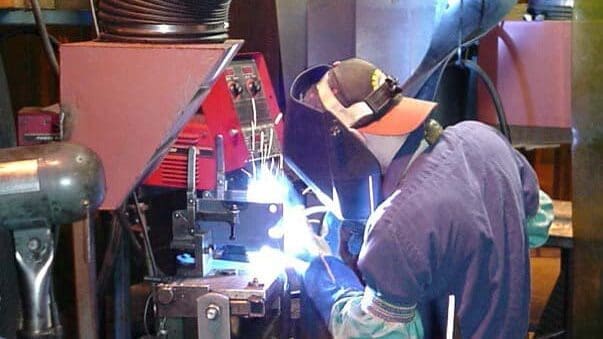
Welding and cutting generate metal fumes and fine particulate that pose serious respiratory risks with repeated exposure. In a training environment where multiple students may be welding simultaneously, fume levels can climb quickly without proper source capture or ambient filtration in place.

Sanding, routing, and sawing release wood dust that lingers in the air long after the machine stops. Fine wood dust is a combustible material, and OSHA regulates exposure limits. Trade school wood shops need systems sized to handle the dust load generated by student activity throughout the day.
Paint overspray, grinding dust, and body filler particles are common in auto tech programs. These contaminants require dedicated capture at the source, whether that is a downdraft table, a clean air booth, or a source capture arm positioned close to the work.
A vocational school shop is not a production facility. The air quality challenges are real, but the operating environment is different in ways that matter when sizing and selecting a system.
OSHA establishes permissible exposure limits for substances generated in school shops, including wood dust, welding fumes, and metal particulate. Schools that operate shops function as employers and are subject to general industry standards.
NFPA also provides standards relevant to fire and explosion prevention in woodworking environments, including dust collection system requirements. Programs with combustible dust hazards in their shops need systems designed with those standards in mind.
For most active vocational programs, the real question is whether the system in place is properly sized and maintained. Working with a partner who understands both the regulatory environment and the practical constraints of school operations helps close those gaps.
There is no single system that fits every vocational shop. The right trade school air filtration solution depends on the trades being taught, the size of the space, and the number of students working at once. Here is a practical overview of what works and where.
Source capture is the most effective way to control weld fumes. A flexible extraction arm positioned at the weld point captures contaminants before they rise into the breathing zone. For multi-station weld bays, ducted cartridge collectors with properly designed hoods move the contaminated air out of the space and through a filtration system before returning clean air to the room. This approach is vocational school fume extraction done at the source, where it counts most.
Cartridge-based central systems serve multi-machine shops efficiently through a network of ductwork. Each machine connects to the system, and all captured material is directed to a single collector. This is a practical fit for trade school air purification in active wood shops and metal fabrication rooms where multiple students work simultaneously. Proper ductwork design and system sizing are critical to performance.
Ambient units hang overhead and continuously cycle the air in the room, capturing fine particulate that escapes the primary collection system. They work well as a second layer of protection in large open shop spaces and in programs where ceiling heights or layout make ductwork impractical. Vocational school air filtration often involves a combination of central collection and ambient units working together.
Environmental Air Technology is headquartered in Omaha, Nebraska, and supports vocational programs and technical schools across the Midwest.
We currently serve facilities in:
Environmental Air Technology has been working with schools and technical training programs for decades. We understand the pressures that vocational directors, facilities managers, and department heads are navigating. We help programs get the right solution in place without overcomplicating it.
Every vocational program and shop layout is a little different, and the right dust collection solution depends on a range of factors specific to your facility. These are the questions we hear most often from program directors, facilities managers, and department heads who are working through the decision.
It depends on the trades being taught. Wood shops and metal fabrication programs often benefit from a central cartridge system with ductwork connecting each machine. Welding programs typically need source capture arms or fume extraction units. Many schools use a combination of approaches. The right starting point is a conversation about what your shop actually produces and how many students are working at once.
Schools that operate shops are considered employers under OSHA and are subject to applicable air quality and permissible exposure limit standards. NFPA also provides standards relevant to combustible dust environments. Whether a specific system is required depends on the contaminants present and the level of exposure. For most active shop programs, some form of dust collection or fume extraction is expected.
Sizing is based on the number and type of machines, the volume of the space, and the airflow required to capture contaminants effectively at each source. Ductwork design plays a large role in whether a system performs as intended. We walk through those variables with you before recommending a system.
In some cases, yes. Central systems can be designed to serve multiple areas through a shared ductwork network. Whether that is practical depends on the layout of your building and the total airflow requirements across all connected spaces. We can assess that and give you a straightforward answer.
Source capture systems extract contaminants directly at the point where they are generated, before they spread into the room. Ambient filtration systems pull air from the broader space and filter it continuously. Source capture is more effective for concentrated fume and dust sources. Ambient filtration is useful as a supplemental layer or in spaces where source capture is not practical at every workstation.
Costs vary based on the size of the shop, the number of machines, system type, and whether ductwork installation is included. Budget-conscious programs often prioritize based on the highest-risk shop first and phase in additional coverage. We can help you build a plan that matches your funding cycle.
Yes. We have an established history of working with vocational programs, CTE centers, and technical training schools. We are also available for Lunch and Learn sessions if you want to bring your team together before making a decision.
Your students and instructors should not be breathing dust and fumes while they learn. Whether you are evaluating systems for the first time or replacing something that is not performing, we can help you find the right fit.
Request a quote to start the conversation. We will ask the right questions, assess your shop layout, and recommend a vocational school dust collection system that works for your program and your budget.